
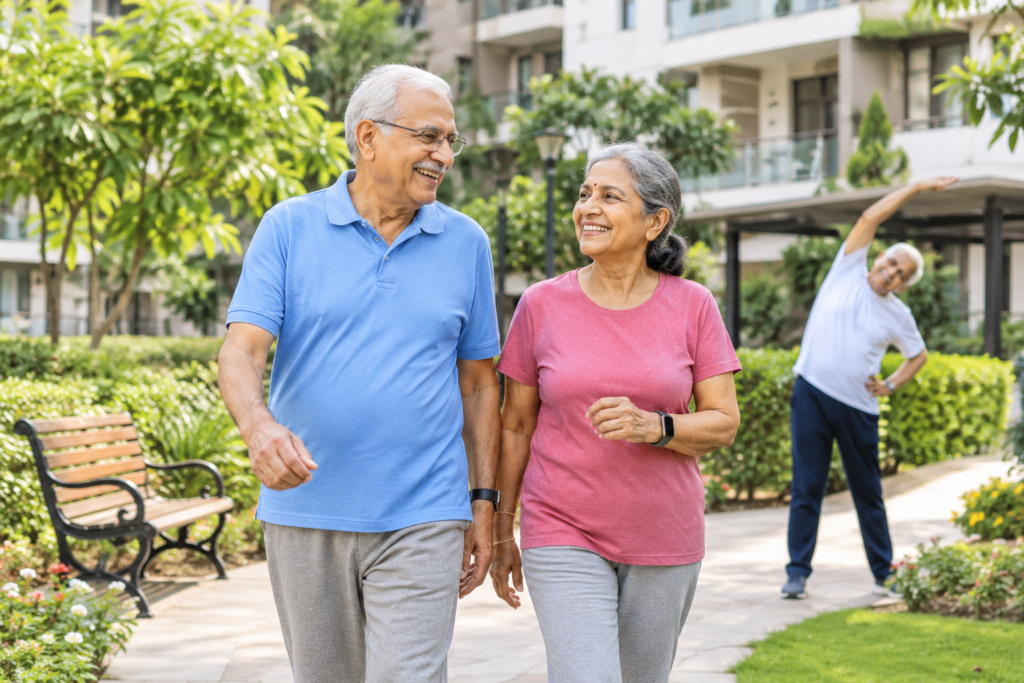
Retirement brings a big change in everyday life. For many people, working for 30–35 years means following a fixed routine, managing responsibilities and spending most of their time on professional commitments. Once retirement begins, the daily schedule changes. There is more free time, fewer work-related responsibilities and an opportunity to focus on personal happiness.
But one question often comes to mind: What should I do with all this free time?
A healthy life after retirement is not only about eating good food or going for a morning walk. It is about staying physically active, keeping the mind engaged, meeting people and having a reason to look forward to each day.
At Bigchamps, we believe retirement should be a fresh beginning. A comfortable home, a supportive community and a healthy daily routine can make this phase more enjoyable.
Here are seven practical ways to stay healthy and active after retirement.
1. Make physical activity a habit
You don’t have to exercise for hours to be active after retirement. Regular simple physical activity can be used to keep people fit and mobile.
Select activities based on age, fitness and health.
- Morning walks: A 20-30 minute walk, depending on how fit you are, will help you keep active.
- Yoga: Gentle yoga and stretching can help to maintain flexibility and balance.
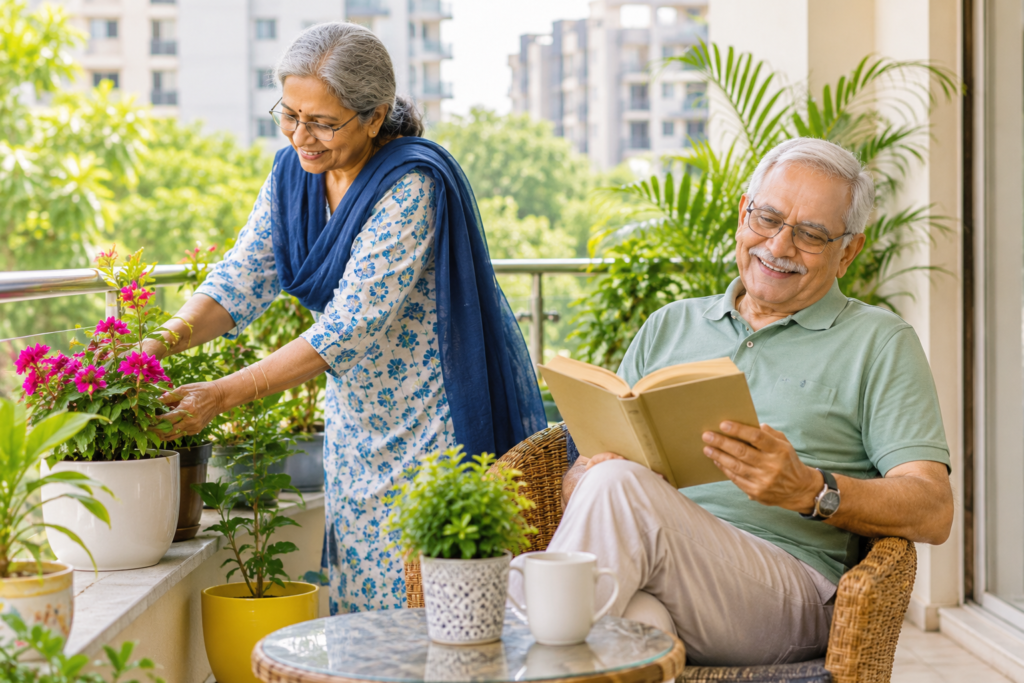
- Gardening: caring for plants and flowers keeps you moving and time in the outdoors.
- Simple exercises: Activities that keep muscles strong and flexible.
- Cycling: Stationary cycling could be an option for those seeking low-impact exercise.
It is not necessary to follow another person’s exercise program. Begin at a comfortable level and ramp up activities over time. Before beginning a new exercise routine, check with your physician if you have a health problem.
Our advice: It’s not as much about the intensity as it is the consistency. It’s better to have a habit of taking a short walk every day than an exercise program that you do for a week and then don’t do anymore.
2. Eat healthy food and follow regular meal timings
As people get older, their food habits should be given special consideration. Others may miss breakfast, eat at odd hours or rely heavily on snack foods.
A good balanced diet can contribute to general health and wellbeing, as well as energy levels.
Make an effort to incorporate these foods into your diet:
- Fresh seasonal fruits and vegetables.
- Dals, beans and protein rich foods.
- Whole grain foods like oats, wheat and millets.
- Milk, curd or any other appropriate calcium sources.
- Nuts and seeds (if appropriate, in small amounts).
- Drink plenty of water all day.
Indian home-cooked food can be a good place to begin. No need of complicated diets or expensive health products.
Individuals with diabetes, kidney disease or other dietary restrictions should adhere to the recommendations of their health care professional.
Eating healthy should not be a punishment. Eating at home with family and friends is another aspect of a happy retirement.
3. Maintain an active mind, with hobbies and new interests
While it’s vital to be physically fit, it’s equally essential to be mentally fit.
Retirees may sometimes experience a lack of challenges and interaction with others that they had during their working years. Days can get repetitive if there is nothing interesting going on.
It’s time to take up old hobbies or try something new.
Here are some activities that you can try:
- Reading newspapers, books or magazines.
- Learning music or playing an instrument.
- Art: Painting, drawing or photography.
- Planning and planting gardens and vegetables.
- Solving puzzles and playing chess.
- Learning to use smartphones and digital tools.
- Participating in local classes or groups.
It’s also a place where you can find out something that you never had a chance to do while you were working. It could be cooking, photography or even a new language.
It is never too late to learn something new!
Our point of view: Retirement shouldn’t be the end of growth. Having a hobby will make your day more meaningful and more interesting.
4. Keep in touch with family, friends and neighbours
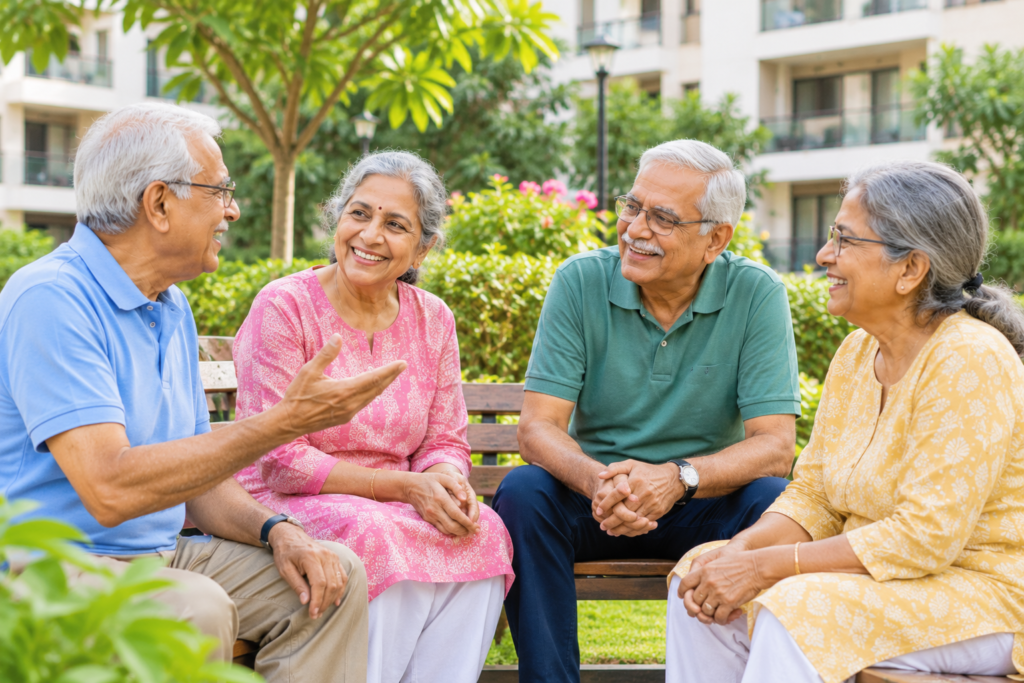
The most significant change following retirement is the decrease in socialization. Workplaces are a natural setting for people to gather, and once retired, it may be less common for those conversations to take place.
Make an effort to:
- Meet friends regularly.
- Take time to spend with children and grandchildren.
- Engage in family activities.
- Participate in walking or hobby clubs.
- Participate in local community activities.
- Keep in touch with former associates.
Technology can also help. Video calls and messaging applications help to communicate with relatives in other cities or countries.
But, online interactions should not be a total substitute for in-person interaction.
This is one of the reasons why the residential community is important when selecting a retirement home. Common areas, walking paths, and opportunities to interact can help to foster friendships.
Apartments are not the only factors to consider when evaluating senior living residences; the social aspect should be included as well.
5. Follow a Proper Sleep Schedule
Any disruption in the daily routine can also impact sleep patterns. For some elderly people, they begin to sleep late, take long naps in the afternoons or watch too much TV at night.
Having a consistent sleep routine can help keep your sleep pattern healthy.
Here are some simple practices you can do:
- Get up and go to bed at the same time.
- Don’t eat heavy foods close to bedtime.
- Limit screen time before bedtime.
- Have a comfortable and quiet bedroom.
- Avoid drinking too much tea or coffee late in the evening.
- Enjoy some natural light in the daytime.
If you regularly experience sleep problems, discuss them with your doctor.
A well designed day with adequate exercise and relaxation can also help establish a good sleep pattern.
6. Select a Home that Supports an Active Retirement Lifestyle
Your surroundings have a bigger impact on your daily routine than you may realise.
Imagine living in a home where there is no comfortable place to walk, no nearby market and limited opportunities to meet people. With a spacious apartment, life can be cumbersome.
When looking for senior living homes near Delhi NCR, one should take into account the following:
- Walking spaces: Do you have safe spaces and green areas for walking daily?
- Access to health care: Is there a hospital, clinic and pharmacy nearby?
- Community areas: Do people have places to sit, talk and spend time together in the community?
- Fitness facilities: Do they have adequate room for yoga and moderate physical activity?
- Convenience: Do grocery stores and other essential services exist nearby?
- Apartment safety: Is the home equipped with convenient lifts, good lighting and senior friendly bathrooms?
It is crucial for home buyers in Gurgaon, Faridabad, Noida and other areas of Delhi NCR to visit the property and see the actual property environment.
Don’t just select a home based on photographs and a list of facilities. Check out the space and how people use it, and if that environment fits the lifestyle you desire.
At Bigchamps, we think that a retirement home should offer more than just comfortable rooms. It should enable the residents to live independently, spend time with others and pursue their own interests.
7. Give Yourself a Purpose Every Day
When talking about Life After Retirement, the need for purpose is something that is overlooked.
When people are working, they have deadlines, meetings, responsibilities. Once retired, those obligations go away. It is great to be free of all obligations, but sometimes, it may be hard to deal with time without a routine.
You can set mini objectives for yourself:
- Take 30 minutes to garden in the morning.
- Read a couple of pages of a book each day.
- Make regular phone calls to a friend or family member.
- Support grandchildren in their learning.
- Do a community service project.
- Teach a new skill every couple of months.
- Take a family trip or day out.
The activities do not have to be difficult. Little tasks can make your days more meaningful.
Retirement is also an excellent time to do something for yourself without taking a vacation.
How Bigchamps Looks at a Healthy Life After Retirement
We feel retirement is another beautiful stage of life at Bigchamps. It is not to be about giving up hobbies or relying on others for all the little things.
The keys to a healthy retirement lifestyle are healthy habits, comfortable homes, social connections and personal independence.
Take your next step in retirement in a new way of life where relaxation and refinement blend and every day is a celebration. Big Champs doesn’t simply build houses for the discerning senior community; we create lifestyles for them as well.
Final Thoughts
There is no need for a new lifestyle, complicated diet or expensive memberships to live a healthy, active life after retirement.
Make it a gradual change. Go for a walk every day, eat a well-balanced meal, make some time to see friends, enjoy your hobbies and do something interesting each day.
When you’re thinking about purchasing a home after retirement, take care of the environment, as well as the apartment itself. The right location and community can make it easier to maintain a healthy and independent lifestyle.
Don’t forget, retirement is not the time to put the brakes on enjoying life. It’s an opportunity to spend more time on activities you enjoy.
Read Also: Retirement Planning in India for a Comfortable Life After 60